Compare screen printing and DTF for work shirts by quantity, logo colors, fabric and reorders. Choose a practical print method for your crew.
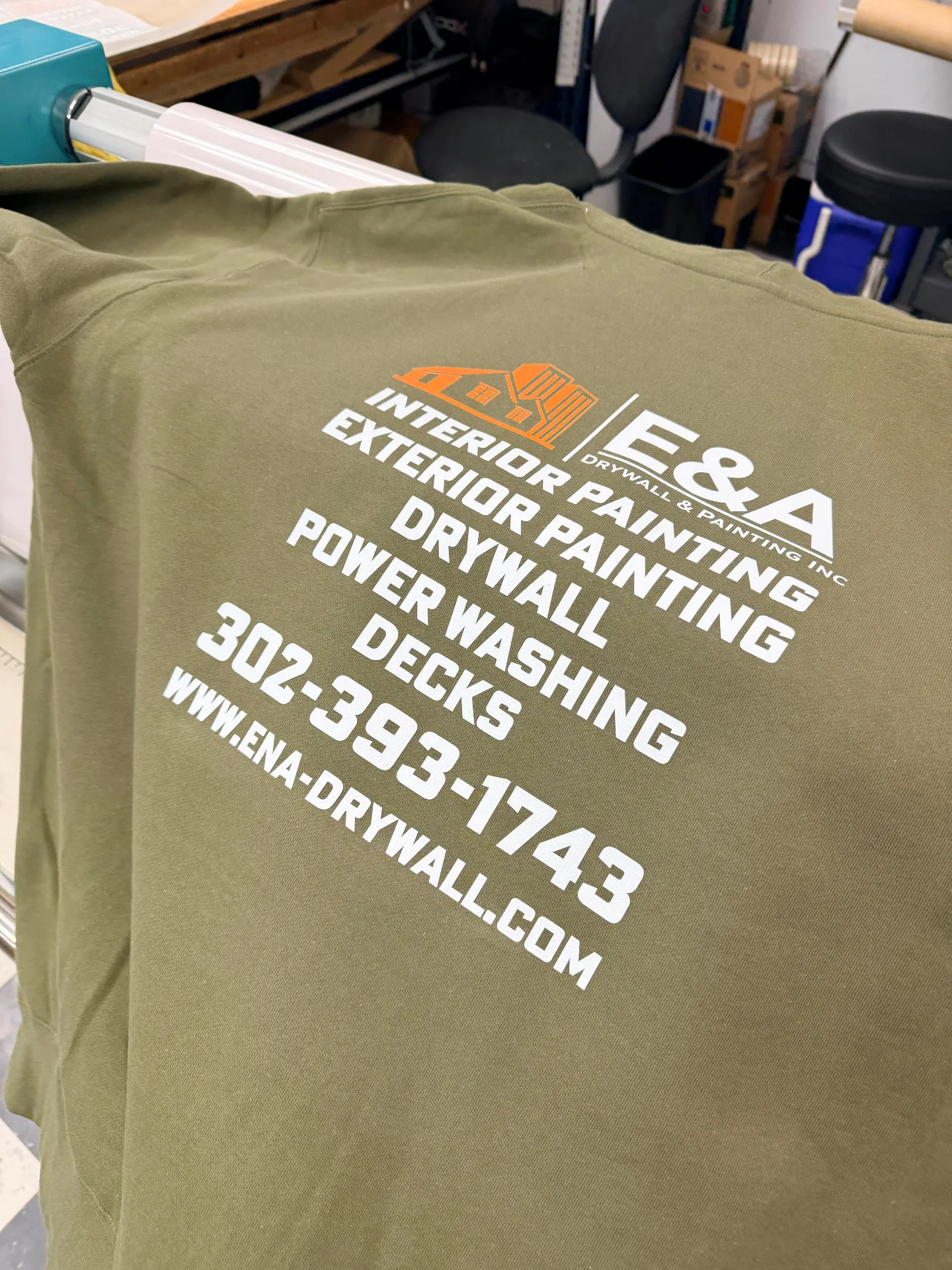
Ordering company shirts involves more than choosing the lowest price per shirt. Your crew needs a garment that suits the work, a logo that reproduces clearly and a practical way to reorder when someone new joins.
Screen printing is worth comparing for a larger run of the same design with a limited number of colors. Direct-to-film printing, or DTF, is worth considering for smaller orders and detailed full-color artwork. Neither is automatically the best choice for every work-shirt order.
At ZeroDegree Signs, we offer screen-printed and DTF apparel. We start with the shirt, artwork and quantity so the method fits the job.
What is the difference between screen printing and DTF?
In direct screen printing, ink passes through prepared screens onto the garment. The artwork and color separations are part of planning the job.
With DTF, the design is printed onto film and transferred to the garment with heat and an adhesive system. Roland DG’s DTF guide describes its use for detailed, full-color designs and small batches without preparing a separate screen for each color.
There are also screen-printed transfers, which are applied with a heat press. They are a distinct option from printing directly onto the shirt. If two suppliers describe an order differently, ask what process is included before comparing the results.
You do not need to select the equipment. You need to tell the printer what the finished shirt should look and feel like.
Compare quantity and artwork together
A simple one-color logo repeated across a larger crew order is a useful candidate for a screen-printing quote. A short order with gradients, multiple colors or individually changing artwork deserves a DTF comparison.
Transfer Express’s comparison of DTF and screen-printed transfers makes a similar distinction between short, colorful jobs and repeated limited-color artwork. That source compares transfer products; it does not establish a universal price crossover for direct screen printing.
| Your order | What to compare |
|---|---|
| The same limited-color design for the whole crew | Screen printing and DTF on the same blank |
| A small order with full-color artwork | DTF |
| Different names or designs across the order | DTF suitability and the cost of each variation |
| A repeat order for a few new employees | The original method, current minimums and consistency with earlier shirts |
| A large solid print covering much of the back | A sample or close comparison of print feel and coverage |
Ask for both options when the decision is close. Quantity alone does not capture the size of the print, number of locations or garment choice.
Choose the work shirt before comparing prices
A cotton-blend tee, a lightweight polyester shirt and a hoodie are different products, even if the same logo goes on each one.
For an outdoor crew, begin with the garment’s fit and suitability for the job. For a customer-facing team, you may prefer a different cut or a polo. Then have the decoration checked against that exact style, fabric and color.
Do not assume a process that worked well on one blank will behave identically on another. Roland DGA’s discussion of DTF production describes its flexibility across apparel applications, but the selected transfer system and garment still need to work together.
The printed area matters to comfort too. Ask to compare a large filled background with artwork that leaves more of the shirt uncovered. That is a design decision you can make before the order is produced.
Make the quote a fair comparison
Give each supplier the same information:
- The garment style, color and size breakdown.
- The total quantity and any variations.
- The artwork and approximate print dimensions.
- Every print location, such as left chest, full back or sleeve.
- Whether the printer supplies the garments.
- Your required date and likely reorder needs.
A chest-only quote should not be compared with a front-and-back package as though they cover the same job. Likewise, decoration on customer-supplied shirts is different from a price that includes the blank.
Use the ZDS shirt-pricing tool to explore the available options, then confirm the final garment and artwork with us. For screen-printing orders, our apparel service page is the place to start.
Plan for reorders and everyday care
Keep the approved artwork, garment style and print-placement details with the order record. When a new employee needs shirts, that information makes it easier to request a consistent result.
If you switch methods on a reorder, ask how closely the new shirts will match the earlier batch. Do not assume the surface finish or feel will be identical simply because the logo file is unchanged.
Request care instructions for the finished garment and print. Follow those instructions rather than relying on an unsupported promise about a specific number of washes. For a larger order, a sample can help resolve questions about fit, artwork size and print feel before every shirt is produced.
Request a company-shirt quote with your logo, quantity and preferred garment. We can compare the options for your crew and explain what is included in the finished order.
Get a Free Quote from ZeroDegree Signs
Serving Wilmington, Newark, Bear & all of New Castle County, DE.